 Find a Dealer


Feature 01 of 4
Start with the right fit
Match the hitch to your receiver, trailer coupler, required rise or drop, and trailer-frame brackets. Check loaded tongue weight and the ratings of every towing component before choosing a kit.


Built to make towing, leveling, and trailer setup simpler.
In stock · Ships within 24 hours
Free shipping on orders over $75 · Lower 48 states
Optional add-ons that pair with this setup.
Already have the Andersen WD Hitch, but need to hook up to more than one trailer?
Instead of having to completely disassemble your WD Hitch to move it from trailer to trailer, simply install a WD Trailer Kit on all of your extra trailers and you'll be able to quickly and easily move from trailer to trailer with your WD Hitch.
Works with all Andersen Weight Distribution Hitches.
Includes all mounting hardware shown.
Available in 4 bracket sizes (please specify bracket size needed):
If your coupler is positioned below the frame, contact Andersen Hitches because you may need a kit with "extended universal" brackets.
NOTE: Requires previous purchase of a complete Andersen WD Kit.
Click the link to find out our product warranty information
VISIT WARRANTY PAGE
Sway control. Bounce damping. No spring bars.
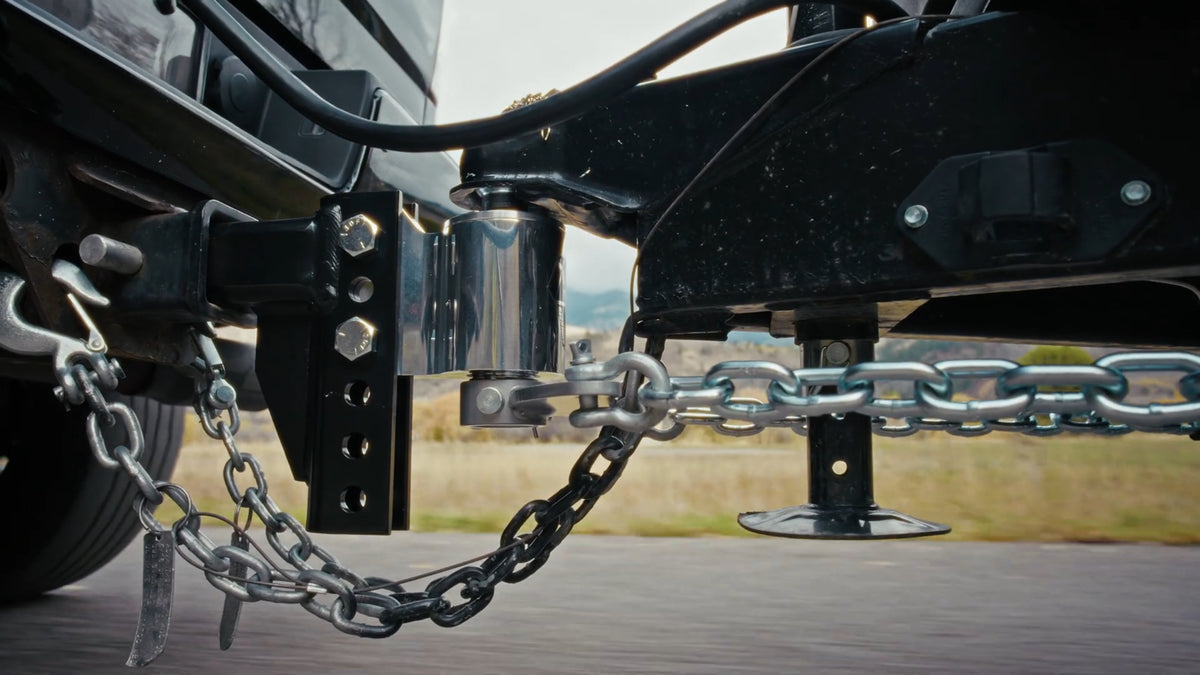
A different approach to towing your travel trailer. The Andersen Weight Distribution Hitch combines a friction cone at the ball with adjustable tension chains to help control sway, transfer tongue load, and soften road bounce. The result is a lighter, steady, and grease free system that is straightforward to set up.
Sway control is built into the hitch.
A tapered ball seats in the friction cone to resist unwanted trailer rotation without a separate sway-control add-on.
No more heavy bars.
Lighweight, adjustable chains connect to frame brackets and help transfer trailer tongue load across the towing setup.
Less bounce on rough roads.
The chain system is designed to dampen the harsh movement that can come through rigid spring bars.
Grease-free where it connects.
The ball housing is designed for clean, grease-free use. Follow the manual for complete care and inspection.
Choose the fit for your truck and trailer.
Match receiver, coupler ball, rise or drop, and trailer-frame brackets before ordering.
Traditional weight distribution hitches rely on heavy, bulky spring bars. Andersen uses adjustable chains to transfer tongue load and a friction cone at the ball to control sway. That combination gives travel trailer owners a cleaner, lighter way to tune their towing setup while keeping the hitch under 60 pounds.
*Product-page maximums. The lowest-rated component sets your towing limit.
Start with your receiver size, then choose the ball, drop, and brackets that match.

2″ receiver · For a matching 2-inch receiver

2½″ receiver · For a matching 2-1/2-inch receiver
3″ receiver · For a matching 3-inch receiver

Feature 01 of 4
Match the hitch to your receiver, trailer coupler, required rise or drop, and trailer-frame brackets. Check loaded tongue weight and the ratings of every towing component before choosing a kit.
Feature 02 of 4
The tapered hitch ball seats in a friction cone inside the ball housing. That contact helps resist unwanted trailer rotation, providing integrated sway control without a separate sway-control attachment.
Feature 03 of 4
Adjustable tension chains run from the ball housing to brackets on the trailer frame. When set according to the installation instructions, they help redistribute tongue load and reduce rear-end sag.
Feature 04 of 4
Urethane springs in the chain system help cushion movement from bumps and uneven roads. Correct trailer loading and chain adjustment still matter for a stable, controlled ride.
Both designs can distribute trailer tongue load when correctly sized and installed. Andersen uses chains and a friction cone to combine load transfer and sway control in a lighter, grease-free ball-housing design. Conventional systems vary widely, so compare the exact models and their instructions.
| Feature | Andersen WD Hitch | Typical Spring-Bar Design |
|---|---|---|
| Weight transfer | ✓ Lightweight adjustable tension chains | ✗ Heavy spring bars under tension |
| Sway control | ✓ Friction cone integrated at the ball | ✗ Integrated or separate system, depending on model |
| Bounce management | ✓ Motion-dampening chain design | ✗ Ride characteristics vary by system and setup |
| Ball housing care | ✓ Grease-free ball housing | ✗ Lubrication requirements vary by model |
| Adjustment | ✓ Set chain tension and bracket placement | ✗ Set spring-bar tension and bracket placement |
| Hitch weight | ✓ Under 60 lb published design | ✗ Can range from 80 to 150+ lb's |
| Fitment | ✓ Receiver, ball, rack, and frame bracket choices | ✗ Model-specific receiver and trailer-frame choices |
Need to check the four key measurements? Start here.
Check your receiver opening, coupler ball, required rise or drop, and trailer frame size. Use the fitment form if you want help narrowing the options.


No questions match your search.
Quick answer: It transfers some trailer tongue load across the tow vehicle and trailer axles.
Proper setup can help restore steering and handling. It does not raise the ratings of the tow vehicle, trailer, receiver, or any other component.
Quick answer: Its tapered ball seats in a friction cone to resist unwanted trailer rotation.
The adjustable chains distribute load and help dampen motion. Trailer loading and correct setup are still essential.
Quick answer: No. Sway control is integrated at the ball housing.
The Andersen design uses tension chains instead of conventional spring bars.
Quick answer: Check four fitment measurements: receiver opening, coupler ball size, required rise or drop, and trailer frame size.
Then verify the loaded tongue weight and every vehicle and component rating. The installation guide explains setup.
Quick answer: The product page lists 2″, 2½″, and 3″ receiver choices, with 2″ and 2⁵⁄₁₆″ ball options.
Select the variant that matches your actual receiver and coupler.
Quick answer: The current product page publishes maximums of 16,000 lb GTWR and 1,600 lb tongue weight.
Confirm the exact kit and all vehicle, trailer, coupler, receiver, and hitch ratings. The lowest-rated component limits the complete towing setup.
Quick answer: The Andersen ball housing is designed for grease-free use.
Read the current manual for inspection and care of the full hitch assembly.
Quick answer: It is designed for compatible bumper pull travel trailers.
Coupler design, frame size, loaded tongue weight, and vehicle ratings determine whether a particular trailer fits.
Quick answer: Use Andersen’s installation video and manual.
The owner support guide covers bracket placement, chain tension, sway, and wear questions.
Quick answer: Start with trailer loading, tongue weight, tire pressure, level setup, bracket position, and chain tension.
Follow the troubleshooting instructions and contact Andersen support if the condition persists.
Quick answer: Andersen’s support guide says this WD Hitch should not be used with surge brakes.
Check the current manual and contact support before ordering if your trailer uses surge brakes.
Quick answer: A second compatible trailer may need its own frame hardware.
Check the WD Trailer Kit for Extra Trailers and confirm each trailer’s coupler, frame, and ratings.
Quick answer: The Andersen Weight Distribution Hitch is a strong choice for compatible travel trailers when you want weight distribution and built-in sway control without traditional spring bars.
Full answer: Andersen uses adjustable tension chains to help distribute tongue load and a friction cone at the ball to help resist sway. The system also helps dampen road bounce and weighs under 60 lb. Its published maximums are 16,000 lb GTWR and 1,600 lb tongue weight. The best hitch for you must still match your trailer, tow vehicle, and the rating of every component in your setup. See Product specifications
Quick answer: Andersen combines integrated sway control and weight distribution in a lighter system that uses tension chains instead of traditional spring bars.
Full answer: Its adjustable chains help transfer tongue load, while the friction cone provides sway control at the ball housing. The ball housing is designed for grease-free use. If you value easier handling, a cleaner connection, and a system designed to soften road bounce, those are meaningful reasons to consider Andersen. Towing performance still depends on correct installation and trailer loading. See Product details
Quick answer: It may be, if the selected kit fits your receiver, coupler, trailer frame, and loaded towing weights.
Full answer: Check your receiver opening, coupler ball size, required rise or drop, frame bracket size, loaded tongue weight, and trailer weight. Confirm the ratings of the tow vehicle, receiver, coupler, trailer, and exact hitch kit; the lowest-rated component sets the towing limit. When those details match, Andersen offers a spring-bar-free option with built-in sway control. See fitment guidance


